Telnet Protocol in C#
Telnet is a network protocol used to provide command-line access to remote machines over a TCP connection. It was widely used before secure protocols like SSH became standard. Telnet allows a client to connect to a remote server and execute commands as if they were running locally, but it transmits all data, including credentials, in plain text. Because of this, it is now considered insecure and is mostly used only in controlled environments or for network diagnostics.
Telnet operates on a simple client-server model where the client opens a connection to a remote host on port 23. Once connected, the server provides a terminal interface that accepts user commands. Unlike modern secure protocols, Telnet does not encrypt communication or verify identity strongly, which makes it vulnerable to interception and spoofing.
Why we use Telnet and when it should be used?
Telnet is mainly used for testing and troubleshooting network services rather than secure administration. It is often used to check whether a port is open, verify connectivity to a service, or test raw protocol responses from servers.
It should only be used in isolated or trusted networks where security is not a concern, such as internal lab environments or debugging simple TCP services. In real production systems, it is generally replaced by secure alternatives like SSH due to its lack of encryption.
Core features and components of Telnet
The client component in Telnet is responsible for initiating a connection to a remote server and sending raw text-based commands. It acts as a simple terminal emulator without built-in security features.
The server component listens for incoming connections on port 23 and provides a command-line interface for executing commands. This interface is often directly tied to the operating system shell in older systems.
The protocol layer defines how data is exchanged between client and server using plain text over TCP. It does not include encryption or strong authentication, which is the main reason for its obsolescence in modern systems.
Option negotiation is a mechanism in Telnet that allows the client and server to agree on terminal behavior such as echo settings or character encoding. While this adds flexibility, it does not improve security.
C# usage and real-world examples
In C#, Telnet can be implemented using basic TCP sockets because it is a simple text-based protocol. It is commonly used in diagnostic tools that check whether a remote service is responding on a specific port.
A basic example of a Telnet-like client in C# uses the TcpClient class to connect and read responses from a server.
using System;
using System.Net.Sockets;
using System.Text;
class Program
{
static void Main()
{
using var client = new TcpClient("howcsharp.com", 23);
using var stream = client.GetStream();
string command = "HELP\r\n";
byte[] data = Encoding.ASCII.GetBytes(command);
stream.Write(data, 0, data.Length);
byte[] buffer = new byte[1024];
int bytes = stream.Read(buffer, 0, buffer.Length);
Console.WriteLine(Encoding.ASCII.GetString(buffer, 0, bytes));
}
}
In real-world C# applications, Telnet is rarely used for production systems but may appear in legacy integration projects or network diagnostic utilities that test device connectivity, such as routers or embedded systems.
Advantages and disadvantages of Telnet
Simplicity is one of Telnet’s main advantages because it is easy to implement and requires no complex setup or encryption configuration. This makes it useful for quick connectivity checks and debugging raw TCP communication.
Another advantage is low overhead since it does not perform encryption or authentication beyond basic connection setup. This can make it slightly faster in very constrained environments, although the difference is usually negligible today.
The biggest disadvantage is the complete lack of security. All data, including usernames and passwords, is transmitted in plain text, making it extremely vulnerable to interception.
Another disadvantage is that Telnet is not suitable for modern distributed systems because it lacks features like secure authentication, file transfer, or tunneling that are essential in real-world infrastructure.
Common mistakes when using Telnet
A common mistake is using Telnet for administrative access to servers in production environments. This exposes credentials and system commands to anyone who can intercept network traffic.
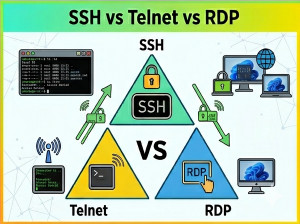
Another mistake is confusing Telnet with SSH for remote management. While they look similar from a user perspective, Telnet does not provide encryption or secure authentication.
Developers also sometimes hardcode Telnet-based connectivity checks into systems without replacing them later, which can create long-term security risks in otherwise modern applications.
Alternatives to Telnet
SSH is the primary replacement for Telnet and provides encrypted communication, secure authentication, and advanced features like tunneling and file transfer. It is the standard for secure remote administration.
API-based communication is another modern alternative where systems expose REST or gRPC endpoints instead of raw terminal access. This allows controlled and structured interactions instead of open command execution.
Network diagnostic tools like port scanners or service health checks also replace Telnet in many scenarios, especially in cloud environments where security policies restrict direct terminal access.
In managed cloud platforms, remote execution tools provided by services like AWS or Azure eliminate the need for Telnet entirely by offering audited and secure command execution interfaces.