FIFO (First In First Out) Principle with C# Examples
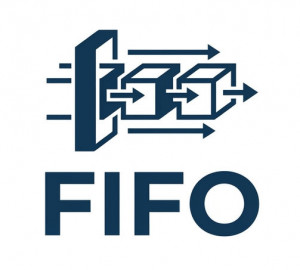
FIFO (First In First Out) is a fundamental data handling principle where the first element added is the first one to be removed. It is one of the most widely used concepts in computer science, operating systems, and distributed systems.
FIFO is commonly implemented using a queue data structure and is essential for modeling real-world sequential processing systems.
It is widely used in:
• Task scheduling systems
• Message queues
• Print spooling systems
• Network packet buffering
• CPU process scheduling
• Streaming pipelines
• Asynchronous processing systems
Why Do We Use FIFO?
FIFO is used to ensure fairness and predictable ordering in systems where tasks must be processed in the exact order they arrive.
It prevents newer tasks from overtaking older ones, ensuring that processing follows a strict chronological sequence.
This is especially important in systems where order matters, such as financial transactions, request handling, and event processing pipelines.
When Should You Use FIFO?
FIFO is a strong choice when:
• Order of processing matters
• You need fair scheduling
• You are building producer-consumer systems
• You are handling streams of events
• You want predictable processing behavior
Common use cases include:
• Message queues (RabbitMQ, Kafka partitions conceptually)
• Background job processing
• Logging systems
• Request handling pipelines
• Print queues
• Buffer management in networking
FIFO vs LIFO
| Feature | FIFO | LIFO |
|---|---|---|
| Order | First In, First Out | Last In, First Out |
| Structure | Queue | Stack |
| Processing Style | Sequential fairness | Most recent first |
| Use Case | Queues, scheduling, pipelines | Recursion, undo operations |
FIFO as a Queue Data Structure
In programming, FIFO is most commonly implemented using a queue where elements are added at the rear and removed from the front.
The queue ensures strict ordering and predictable processing behavior.
FIFO in Operating Systems
Operating systems use FIFO principles in several areas such as process scheduling and I/O management.
For example, in simple scheduling systems, processes are executed in the order they arrive in the ready queue.
FIFO is also used in:
• Disk scheduling
• Network packet buffering
• Memory page replacement strategies (basic models)
FIFO in Real-World Systems
FIFO is heavily used in distributed systems and backend architectures.
In message-driven systems, events are often processed in the order they are received to ensure consistency and predictable behavior.
However, some modern systems may use priority-based or partitioned ordering depending on scalability needs.
C# FIFO Implementation
In C#, FIFO behavior is implemented using the Queue<T> class.
Basic Queue Example
using System.Collections.Generic;
var queue = new Queue();
queue.Enqueue("Task 1");
queue.Enqueue("Task 2");
queue.Enqueue("Task 3");
Console.WriteLine(queue.Dequeue()); // Task 1
Console.WriteLine(queue.Dequeue()); // Task 2
Peeking Without Removing
var next = queue.Peek();
Console.WriteLine(next);
FIFO Producer-Consumer Example
var queue = new Queue<int>();
// Producer
for (int i = 0; i < 5; i++)
{
queue.Enqueue(i);
}
// Consumer
while (queue.Count > 0)
{
int item = queue.Dequeue();
Console.WriteLine($"Processing {item}");
}
Advantages of FIFO
• Simple and intuitive model
• Ensures fairness in processing
• Predictable execution order
• Easy to implement
• Widely supported in systems and frameworks
Disadvantages of FIFO
• No prioritization support
• Long tasks can block short tasks
• Not suitable for priority-based systems
• Can cause latency under heavy load
Common Mistakes
• Using FIFO when priority processing is required
• Blocking the queue with long-running tasks
• Not handling queue overflow scenarios
• Ignoring concurrency safety in multi-threaded environments
• Using FIFO without backpressure mechanisms
Best Practices
• Use FIFO for ordered processing pipelines
• Combine with async processing for scalability
• Implement backpressure in high-load systems
• Use concurrent queues in multithreaded environments
• Monitor queue size and processing latency
Conclusion
FIFO is one of the most fundamental principles in computer science and system design. It ensures fair and predictable processing by handling elements in the exact order they arrive.
From operating systems to distributed message queues and C# applications, FIFO plays a critical role in building reliable and structured processing pipelines.
While simple, FIFO becomes extremely powerful when combined with asynchronous processing and modern distributed system architectures.