Macros (C/C++): Preprocessor Directives, Code Generation and Best Practices
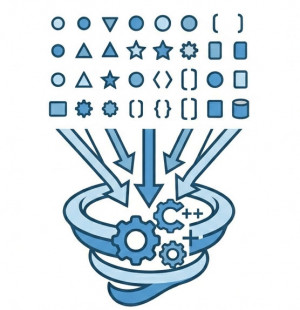
Macros in C and C++ are preprocessor directives that allow code to be replaced or generated before compilation. They are handled by the preprocessor, not by the compiler itself.
Macros are commonly used for:
• Code reuse
• Conditional compilation
• Constants definition
• Platform-specific code
• Performance optimizations in low-level systems
Unlike functions, macros perform simple text substitution before the compilation process begins.
Why Do We Use Macros?
Macros provide a way to write flexible and reusable code at compile time.
Main reasons include:
• Eliminating repetitive code
• Enabling platform-dependent compilation
• Creating compile-time constants
• Reducing function call overhead in low-level code
However, macros should be used carefully because they do not respect type safety.
How Macros Work
The preprocessor replaces macro definitions before compilation begins.
Example:
#define PI 3.14159

double area = PI * 10 * 10;
After preprocessing, this becomes:
double area = 3.14159 * 10 * 10;
The compiler never sees the macro itself.
Function-like Macros
Macros can also behave like functions.
Example:
#define SQUARE(x) (x * x)

int result = SQUARE(5);
This expands to:
int result = (5 * 5);
However, macros do not evaluate types or expressions safely.
Macro Risks and Pitfalls
1. Operator Precedence Issues
Bad example:
#define SQUARE(x) x * x

int result = SQUARE(2 + 3);
This expands incorrectly to:
int result = 2 + 3 * 2 + 3;
Correct version:
#define SQUARE(x) ((x) * (x))
2. No Type Safety
Macros do not validate data types, which can lead to unexpected behavior.
3. Debugging Difficulty
Since macros are expanded before compilation, debugging errors becomes harder.
Conditional Compilation
Macros are widely used for platform-specific code.
Example:
#ifdef _WIN32
    printf("Running on Windows\n");
#else
    printf("Running on Linux\n");
#endif
This allows the same codebase to support multiple operating systems.
Include Guards
Macros are used to prevent multiple inclusion of header files.
Example:
#ifndef MY_HEADER_H
#define MY_HEADER_H

void MyFunction();

#endif
This ensures the header file is included only once during compilation.
Macros vs Inline Functions
Modern C++ often replaces macros with inline functions.
| Feature | Macros | Inline Functions |
|---|---|---|
| Type Safety | No | Yes |
| Debugging | Difficult | Easier |
| Performance | Fast | Fast |
| Maintainability | Low | High |
Modern Alternatives
In modern C++ development, macros are often replaced with:
• constexpr
• inline functions
• templates
• enum class constants
These alternatives provide better type safety and maintainability.
Best Practices
• Avoid complex macros
• Always wrap macro parameters in parentheses
• Prefer inline functions when possible
• Use macros only for conditional compilation
Conclusion
Macros in C and C++ are powerful but dangerous tools. They allow compile-time code manipulation, but lack type safety and can introduce subtle bugs.
Modern C++ development favors safer alternatives such as inline functions and constexpr, but macros are still widely used in system-level programming and cross-platform development.