Message Queue vs Event Streaming vs Pub/Sub Systems: Architecture, Patterns and Use Cases
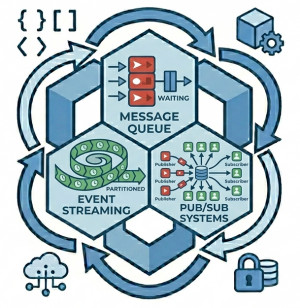
Modern distributed systems rely heavily on asynchronous communication patterns to improve scalability, resilience, and decoupling between services.
The three most common messaging approaches are Message Queues, Event Streaming, and Pub/Sub systems. While they are often used interchangeably, they solve different architectural problems.
These systems are widely used in:
• Microservices architectures
• Cloud-native applications
• Real-time systems
• Data pipelines
• High-scale backend platforms
High-Level Overview
Message Queue systems focus on point-to-point communication where a message is consumed by a single worker.
Event Streaming systems treat data as an immutable log of events that can be replayed and processed by multiple consumers.
Pub/Sub (Publish/Subscribe) systems broadcast messages to multiple subscribers in real time.
Architecture Comparison
Message Queue: Producer sends a message to a queue, and one consumer processes it.
Event Streaming: Producers write events to a log; multiple consumers read from different offsets independently.
Pub/Sub: Producers publish messages to a topic, and all subscribers receive the message simultaneously.
Core Concept Differences
Message Queue:
• One-to-one delivery
• Message is removed after consumption
• Task-based processing
• Example: job processing systems
Event Streaming:
• Append-only event log
• Replayable events
• Multiple independent consumers
• Event history is preserved
Pub/Sub:
• One-to-many broadcast
• Real-time message delivery
• Subscribers receive live updates
• Often transient messages
Delivery Model Comparison
Message Queue: Competing consumers pattern ensures each message is processed once.
Event Streaming: Consumers maintain offsets and can reprocess historical data.
Pub/Sub: Messages are pushed to all active subscribers but may not be stored long-term.
Scalability Differences
Event Streaming systems (like Kafka-style architectures) scale extremely well for high-throughput data pipelines.
Message Queues scale by adding workers but are limited by queue contention.
Pub/Sub systems scale well for real-time broadcasting but may struggle with large historical datasets.
C# Example Usage
Message Queue (conceptual):
queue.Enqueue("OrderCreated");

var message = queue.Dequeue();

Console.WriteLine(message);
Event Streaming (Kafka-style):
producer.Produce("orders", new Event { Id = 1, Type = "OrderCreated" });

consumer.Subscribe("orders");

while (true)
{
    var evt = consumer.Consume();
    Console.WriteLine(evt.Value);
}
Pub/Sub (Redis-like concept):
subscriber.Subscribe("notifications", message =>
{
    Console.WriteLine(message);
});

publisher.Publish("notifications", "New message arrived");
Use Case Comparison
Message Queue is best for:
• Background job processing
• Order processing systems
• Task scheduling
• Retry-based workflows
Event Streaming is best for:
• Real-time analytics
• Event sourcing systems
• Data pipelines
• Audit logging systems
Pub/Sub is best for:
• Real-time notifications
• Chat systems
• Live updates (dashboards)
• System-wide broadcasts
Advantages and Disadvantages
Message Queue:
• Simple and reliable
• Strong delivery guarantees
• Limited replay capability
Event Streaming:
• High throughput
• Event replay capability
• More complex architecture
Pub/Sub:
• Real-time delivery
• Easy fan-out pattern
• Weak persistence guarantees
Common Mistakes
• Using message queues for event replay systems
• Using pub/sub for reliable job processing
• Overengineering simple workflows with Kafka
• Ignoring consumer offset management in streaming systems
Conclusion
Message Queues, Event Streaming, and Pub/Sub systems all solve different communication problems in distributed systems.
Message Queues are ideal for task-based processing, Event Streaming excels in scalable data pipelines and event sourcing, while Pub/Sub systems are best for real-time broadcasting scenarios.
Choosing the right model depends on consistency requirements, scalability needs, and whether historical replay is required.