Gzip vs Brotli vs Zstd Compression: Modern Data Compression Algorithms Compared
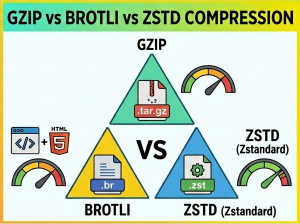
Data compression is a critical optimization technique used in modern web applications, APIs, and distributed systems to reduce payload size and improve performance.
Gzip, Brotli, and Zstandard (Zstd) are three widely used compression algorithms, each optimized for different trade-offs between speed, compression ratio, and CPU usage.
These algorithms are commonly used in:
• Web API responses
• CDN content delivery
• Microservices communication
• Logging and telemetry systems
• File storage optimization
What is Gzip?
Gzip is one of the oldest and most widely supported compression algorithms based on the DEFLATE method.
It offers a balanced trade-off between compression speed and compatibility.
What is Brotli?
Brotli is a modern compression algorithm developed by Google, optimized for web content.
It provides better compression ratios than Gzip, especially for text-based data like HTML, CSS, and JSON.
What is Zstandard (Zstd)?
Zstandard (Zstd) is a high-performance compression algorithm developed by Facebook, designed for both speed and compression efficiency.
It is highly configurable and performs extremely well in real-time systems.
Core Concept Differences
Gzip:
• Old but widely supported
• Moderate compression ratio
• Fast compression and decompression
Brotli:
• Higher compression ratio than Gzip
• Slower compression but efficient decompression
• Ideal for web assets
Zstd:
• Very fast compression and decompression
• Highly configurable levels
• Excellent for real-time systems
Comparison Table
| Feature | Gzip | Brotli | Zstd |
|---|---|---|---|
| Compression Ratio | Medium | High | High |
| Speed | Fast | Medium | Very Fast |
| CPU Usage | Low | Medium | Low to Medium |
| Best Use Case | Legacy systems | Web content delivery | Real-time systems |
| Browser Support | Universal | Modern browsers | Limited native support |
| Latency Impact | Low | Medium | Very Low |
Execution Model Differences
Gzip uses the DEFLATE algorithm to compress data efficiently with broad compatibility.
Brotli uses a modern dictionary-based approach optimized for web text compression.
Zstd uses advanced entropy coding and dictionary compression for high-speed processing.
Gzip Example (C# ASP.NET Core)
public void ConfigureServices(IServiceCollection services) { services.AddResponseCompression(options =>{options.EnableForHttps = true;options.Providers.Add<GzipCompressionProvider>();}); }
Gzip is commonly used as a default compression method in web servers.
Brotli Example (C# ASP.NET Core)
services.AddResponseCompression(options => {options.Providers.Add<BrotliCompressionProvider>(); });
Brotli provides better compression for static web assets like HTML and JSON.
Zstd Example (Conceptual C# Usage)
using ZstdNet; public byte[] Compress(byte[] data) {using var compressor = new Compressor();return compressor.Wrap(data); } public byte[] Decompress(byte[] data) {using var decompressor = new Decompressor();return decompressor.Unwrap(data); }
Zstd is often used in high-performance backend systems and data pipelines.
Performance Considerations
Gzip: Reliable and widely supported but not the most efficient.
Brotli: Better compression ratio for web content but higher CPU cost during compression.
Zstd: Best overall balance of speed and compression efficiency for modern systems.
When to Use Each?
Use Gzip when:
• Compatibility is critical
• Supporting legacy clients
• Simple server setups
Use Brotli when:
• Optimizing web performance
• Serving static assets via CDN
• Reducing bandwidth usage
Use Zstd when:
• Building high-performance backend systems
• Real-time data compression is needed
• Working with large-scale data pipelines
Common Mistakes
• Using Brotli for all API responses without considering CPU cost
• Ignoring browser compatibility for Brotli
• Using Gzip in high-performance systems unnecessarily
• Not tuning compression levels for workload type
Advantages and Disadvantages
Gzip:
• Universal support
• Lower efficiency
Brotli:
• Excellent web compression
• Higher CPU usage
Zstd:
• Best performance balance
• Limited browser support
Conclusion
Gzip, Brotli, and Zstd represent three generations of compression technology.
Gzip is the legacy standard, Brotli is optimized for modern web delivery, and Zstd is designed for high-performance systems.
Choosing the right compression algorithm depends on performance goals, compatibility requirements, and system architecture.