Google Mocking Framework (GMock)

The Google Mocking Framework (gMock) is a C++ library used for creating mock objects in unit testing. It is part of the larger Google Test ecosystem and is designed to work alongside Google Test to support isolation testing.
gMock allows developers to simulate the behavior of real classes or interfaces so that dependencies can be tested independently, without relying on actual implementations, databases, or external systems.
Why GMock is used?
GMock helps you:
• Isolate the unit under test from external dependencies
• Control behavior of dependencies (e.g., return values, errors)
• Verify interactions (e.g., “was this function called?”)
• Test edge cases that are hard to reproduce with real components
When to use GMock?
Use GMock when:
• Your code depends on external systems (database, network, file system)
• You want fast and deterministic tests
• You need to verify interactions, not just outputs
• You are following unit testing best practices
Avoid overusing it when:
• Real implementations are simple and fast (mocking adds unnecessary complexity)
• You’re writing integration tests (real components are preferable)
Core concepts of GMock
1. Mock Object
A class that simulates a real dependency
2. Expectations
Rules you define about how the mock should be used
3. Actions
What the mock should do when a method is called
Key Features of gMock
• Creation of mock classes from interfaces
• Definition of expected method calls and behaviors
• Support for argument matching and constraints
• Ability to specify return values and side effects
• Verification of call order and call frequency
• Tight integration with Google Test assertions
Mocking in gMock
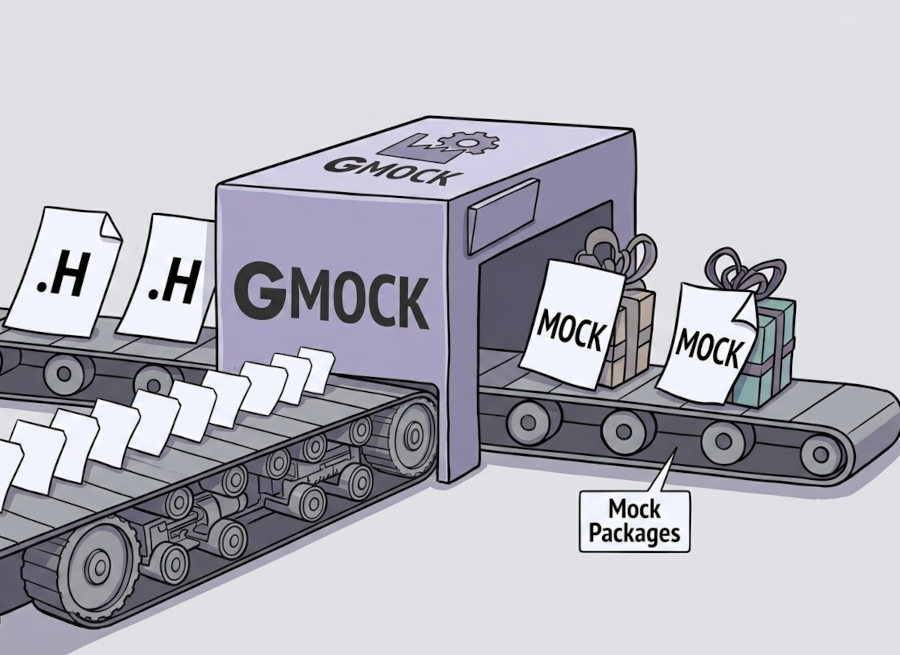
Mocking in gMock involves creating a fake version of a class that mimics its interface.
Key idea:
• Replace real dependencies with mock objects
• Control how these objects behave during tests
• Verify how the system interacts with them
This is useful for isolating the unit under test.
Expectations and Behavior Control
gMock allows you to define expectations such as:
• Which methods should be called
• How many times they should be called
• What arguments they should receive
• What they should return
Example concepts:
• “This method must be called once”
• “Return 42 when called with input X”
• “Do not allow this method to be called”
Matchers in gMock
Matchers are used to validate input arguments.
Common examples:
• Eq(x) → equals x
• Gt(x) → greater than x
• StrEq("text") → string match
• AnyOf(...) → multiple allowed values
Matchers make tests more flexible and expressive.
Advantages and Limitations
Advantages
• Enables isolation of unit tests
• Removes dependency on real systems (DB, network, APIs)
• Highly expressive expectations and assertions
• Integrates seamlessly with Google Test
• Supports complex interaction verification
Limitations
• Heavy use of macros can reduce readability
• Steeper learning curve for beginners
• Overuse may lead to brittle tests
• Requires good interface design for effective mocking
• Can increase test maintenance overhead
GMock vs GTest (important distinction)
Google Test
→ Testing framework (assertions, test execution)
Google Mock
→ Mocking framework (fake objects and interaction verification)
They are usually used together.
Alternatives to GMock
Trompeloeil
Modern and expressive
FakeIt
Lightweight and simple
CppUMock
Often used in embedded systems