Regression in Machine Learning: Concepts, Algorithms, Use Cases and Real-World Applications
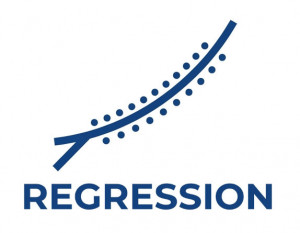
Regression is a supervised machine learning technique used to predict continuous numerical values based on input features.
Unlike classification, which predicts categories, regression focuses on estimating real-valued outputs such as prices, temperatures, or demand levels.
Regression is widely used in predictive analytics and forecasting systems across industries.
It is commonly applied in:
• House price prediction
• Stock price forecasting
• Sales forecasting
• Weather prediction
• Risk estimation
• Energy consumption prediction
Why Do We Use Regression?
Many real-world problems require predicting numerical values rather than categories.
Regression helps model relationships between variables and estimate outcomes based on historical data.
It is essential for forecasting trends and supporting data-driven decision-making.
When Should You Use Regression?
Regression should be used when:
• Output is a continuous numeric value
• You need prediction rather than classification
• Historical numeric data is available
• Relationships between variables can be learned
Common use cases include:
• Pricing models
• Demand forecasting
• Financial prediction
• Sensor data prediction
• Business analytics
How Regression Works
Regression models learn the relationship between input variables (features) and a continuous output variable (target).
The model tries to minimize the difference between predicted and actual values using a loss function.
Typical workflow:
• Collect data
• Preprocess and clean data
• Select features
• Train regression model
• Evaluate performance
• Deploy for prediction
Common Regression Algorithms
Linear Regression
The simplest regression model that assumes a linear relationship between input and output variables.
Equation form:
y = mx + b
Multiple Linear Regression
Extends linear regression to multiple input variables.
Used when output depends on several factors.
Polynomial Regression
Models nonlinear relationships by adding polynomial terms.
Useful when data shows curved trends.
Ridge Regression
Adds L2 regularization to reduce overfitting.
Lasso Regression
Adds L1 regularization and can eliminate irrelevant features.
Decision Tree Regression
Splits data into regions and predicts average values in each region.
Random Forest Regression
An ensemble of decision trees that improves stability and accuracy.
Support Vector Regression (SVR)
Uses margin-based optimization to predict continuous values.
Regression Evaluation Metrics
Mean Absolute Error (MAE)
Measures average absolute difference between predictions and actual values.
Mean Squared Error (MSE)
Penalizes larger errors more heavily by squaring differences.
Root Mean Squared Error (RMSE)
Square root of MSE, representing error in original units.
R-squared (R²)
Indicates how well the model explains variance in the data.
R² = 1 - (SS_res / SS_tot)
Regression vs Classification
| Feature | Regression | Classification |
|---|---|---|
| Output Type | Continuous values | Discrete labels |
| Example | House price prediction | Spam detection |
| Goal | Value estimation | Categorization |
| Metrics | MAE, MSE, RMSE | Accuracy, F1 Score |
Real-World Use Cases
• Real estate price estimation
• Stock market forecasting
• Sales demand prediction
• Weather forecasting systems
• Energy consumption prediction
• Risk modeling in finance
Advantages of Regression
• Provides continuous predictions
• Useful for forecasting trends
• Easy to interpret (linear models)
• Works well with structured data
• Wide range of algorithms available
Disadvantages of Regression
• Sensitive to outliers
• Can overfit complex data
• Assumes relationships between variables
• Requires good feature engineering
• Performance depends on data quality
Common Mistakes
• Ignoring outliers
• Using linear models for nonlinear data
• Poor feature selection
• Not normalizing data when needed
• Overfitting with complex models
Best Practices
• Analyze data distribution before modeling
• Handle outliers properly
• Use regularization techniques
• Evaluate using multiple metrics
• Validate models with cross-validation
Conclusion
Regression is a fundamental machine learning technique used to predict continuous values. It plays a critical role in forecasting, analytics, and decision-making systems across industries.
Understanding regression algorithms, evaluation metrics, and best practices is essential for building accurate predictive models in real-world applications.