CRUD: Create, Read, Update, Delete Operations in Software Development and Databases
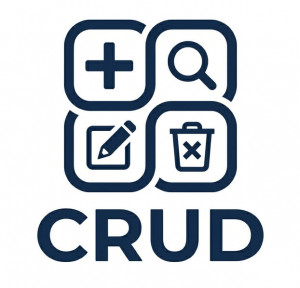
CRUD stands for Create, Read, Update, and Delete, which are the four basic operations used to manage persistent data in software systems.
These operations form the foundation of almost every database-driven application, including web apps, APIs, and enterprise systems.
CRUD is commonly used in:
• Web applications
• RESTful APIs
• Database systems
• Admin dashboards
• Enterprise software
• Mobile applications
Why Do We Use CRUD?
CRUD provides a standardized way to interact with data.
Instead of handling data inconsistently, developers rely on CRUD to ensure predictable and structured data operations.
It helps in:
• Organizing application logic
• Simplifying database interactions
• Standardizing API design
• Improving maintainability
• Supporting scalability
CRUD Operations Explained
Create
Used to add new records to a database.
Example: Creating a new user account.
Read
Used to retrieve data from a database.
Example: Fetching a list of products.
Update
Used to modify existing data.
Example: Updating a user's email address.
Delete
Used to remove data from a database.
Example: Deleting an order record.
CRUD in Databases
CRUD operations map directly to SQL commands:
• Create → INSERT
• Read → SELECT
• Update → UPDATE
• Delete → DELETE
Example SQL CRUD
-- Create
INSERT INTO Users (Name, Email) VALUES ('Alice', 'alice@howcsharp.com');
-- Read
SELECT * FROM Users;
-- Update
UPDATE Users SET Email = 'new@howcsharp.com' WHERE Id = 1;
-- Delete
DELETE FROM Users WHERE Id = 1;
CRUD in REST APIs
In REST architecture, CRUD operations map to HTTP methods:
• Create → POST
• Read → GET
• Update → PUT / PATCH
• Delete → DELETE
Example REST Endpoints
POST /api/users
GET /api/users
PUT /api/users/1
DELETE /api/users/1
CRUD in Application Architecture
CRUD operations are typically implemented in layers:
• Controller (API layer)
• Service layer (business logic)
• Repository (data access layer)
• Database (persistent storage)
Advantages of CRUD
• Simple and intuitive model
• Standard across most systems
• Easy to implement and understand
• Works well with REST APIs
• Highly maintainable
Disadvantages of CRUD
• May become too simplistic for complex systems
• Not suitable alone for event-driven architectures
• Can lead to anemic domain models if overused
• Doesn’t define business logic complexity
Common Mistakes
• Using GET requests for data modification
• Not validating input before Create/Update
• Deleting data without soft delete strategy
• Ignoring authorization rules
• Poor API endpoint design
Best Practices
• Use proper HTTP methods for CRUD operations
• Implement validation on Create/Update
• Use soft deletes when needed
• Follow RESTful API conventions
• Secure all data modification endpoints
CRUD Use Cases
• User management systems
• E-commerce product catalogs
• Content management systems (CMS)
• Admin dashboards
• Inventory tracking systems
Conclusion
CRUD is the fundamental concept behind data manipulation in almost every modern software system. It provides a simple but powerful structure for interacting with databases and APIs.
Understanding CRUD is essential for backend development, API design, and database management.