
Exclusive Consumer, Exclusive Queues
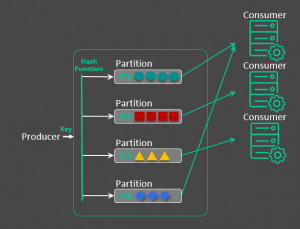
In Apache ActiveMQ, both Exclusive Consumer and Exclusive Queue are mechanisms to ensure that only one consumer processes messages at a time, even when multiple consumers are connected. They’re often used to preserve ordering or avoid concurrent processing issues—but they work slightly differently.
The broker will pick a single MessageConsumer to get all the messages for a queue to ensure ordering. If that consumer fails, the broker will auto failover and choose another consumer. So the effect is a heterogeneous J2EE cluster where each JVM has the same setup and configuration; the broker is choosing one consumer to be the master and send all the messages to it in order until it dies; then you get immediate failover to another consumer.
1. What is an Exclusive Consumer?
An Exclusive Consumer means: Among multiple consumers on a queue, only one consumer is actively receiving messages, while others stay idle as backups.
How it works
• You can have multiple consumers connected.
• One is chosen as the exclusive consumer.
• If it disconnects, another takes over automatically.
Example: Imagine 3 services listening to the same queue
• Consumer A (active)
• Consumer B (standby)
• Consumer C (standby)
Only A processes messages unless it fails.
2. What is an Exclusive Queue?
An Exclusive Queue means: The queue itself is configured so that only one consumer can consume messages at any given time.
How it works
• The queue enforces exclusivity.
• Even if multiple consumers try to connect, only one is allowed to consume.
• Others may be blocked or not receive messages depending on config.
Why We Use Them?
1. Preserve Message Order
If multiple consumers process messages in parallel, order can break. Exclusive handling ensures: FIFO order is maintained
2. Avoid Race Conditions
When processing involves shared resources (like updating a database row): Prevents concurrent updates
3. Simplify Logic
No need for complex locking or synchronization in your code.
4. Failover Safety (Exclusive Consumer)
Standby consumers take over automatically if the active one fails.
Key Components / Concepts
1. Queue
The destination where messages are stored.
2. Consumer
Application that receives and processes messages.
3. Broker (ActiveMQ)
Manages routing and delivery.
4. Dispatch Policy
Determines how messages are distributed to consumers.
5. Connection / Session
Underlying communication channels.
Key Features
Exclusive Consumer
• Automatic failover
• Hot standby consumers
• No parallel processing
• Transparent to producers
Exclusive Queue
• Enforced single-consumer access
• Strong ordering guarantee
• Broker-level control
Advantages of Exclusive Systems
Data Consistency
No concurrent processing issues.
Ordered Processing
Maintains strict message order.
Simpler Application Code
No need for locks or distributed coordination.
High Availability (Exclusive Consumer)
Standby consumers ensure continuity.
Disadvantages os Exclusive Systems
Reduced Throughput
Only one consumer processes messages → bottleneck
Resource Underutilization
Idle consumers (in exclusive consumer mode)
Single Point of Processing
If the active consumer is slow → entire system slows down
Less Scalability
Doesn’t scale horizontally like competing consumers