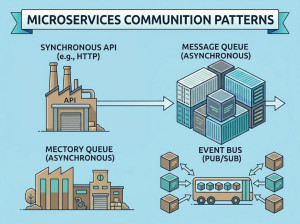
Monolith vs Microservices: Architecture Differences, Pros, Cons, Use Cases, and C# Examples
What is a Monolith Architecture?
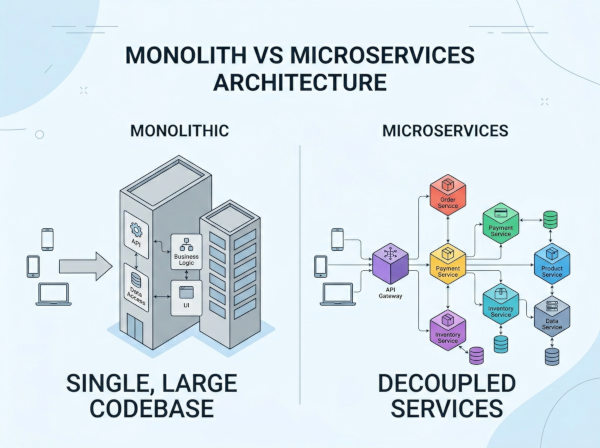
A monolithic architecture is a software design where all application components are built, deployed, and managed as a single unified application.
A monolith usually contains the user interface, business logic, authentication, database access, and background processing inside one codebase and one deployment unit. When a developer changes one module, the entire application is typically rebuilt and redeployed together. This architecture is very common in startups and internal business applications because it is simpler to develop and easier to understand at the beginning of a project. Traditional enterprise systems, older ERP platforms, and many MVC web applications started as monoliths.
Why We Use Monolith Architecture?
Monoliths are used because they reduce operational complexity and allow teams to move quickly in the early stages of development. A small development team can work inside one repository without dealing with distributed systems, network communication, or service orchestration. Debugging is usually easier because all components run inside the same process and logs are centralized. For many business applications with moderate traffic, a monolith is more than enough and avoids unnecessary infrastructure costs.
Strengths of Monolith
Simpler Development Experience
A monolithic application is easier to start because everything exists in one project structure. Developers do not need to configure service discovery, API gateways, distributed tracing, or container orchestration systems. This simplicity allows teams to focus directly on business features instead of infrastructure concerns.
Easier Testing and Debugging
Since all modules run together in one process, developers can debug the entire application locally without complex distributed environments. Stack traces, logs, and database transactions are easier to follow because requests stay inside the same application boundary. This reduces troubleshooting time significantly for smaller teams.
Lower Infrastructure Cost
A monolith can often run on a single server or a small number of servers. There is no need for Kubernetes clusters, service meshes, message brokers, or distributed monitoring systems in the early stages. For startups or internal tools, this reduces hosting and DevOps expenses.
Faster Initial Development
Early product development usually moves faster with a monolith because developers can implement features without worrying about cross-service communication. A single deployment pipeline simplifies release management. This helps companies validate business ideas quickly.
Weak Points of Monolith
Scaling Limitations
If one part of the application experiences high traffic, the entire system must often scale together. For example, an image processing module may require additional CPU resources even though the rest of the application is lightly used. This leads to inefficient resource utilization.
Large and Complex Codebase Over Time
As the application grows, the codebase can become difficult to maintain. Developers may accidentally create tight coupling between modules, making changes risky and slower. New developers can also struggle to understand large monolithic systems.
Slower Deployments
Even a small change usually requires rebuilding and redeploying the entire application. In large enterprise monoliths, deployment processes can become slow and risky. A single bug can potentially affect the whole system.
Technology Lock-In
Because everything is tightly integrated, migrating one module to a different technology stack becomes difficult. For example, replacing one component with a newer framework may require major refactoring across the entire application.
What are Microservices Architecture?
Microservices architecture is a design approach where an application is divided into small independent services that communicate through APIs or messaging systems.
Each microservice focuses on a specific business capability such as authentication, payment processing, notifications, or inventory management. These services can be developed, deployed, scaled, and maintained independently from each other. Teams often use separate databases, deployment pipelines, and even different programming languages for different services. Large-scale systems like e-commerce platforms, streaming services, and cloud-native applications commonly use microservices to achieve flexibility and scalability.
Why We Use Microservices Architecture?
Microservices are used because they allow large systems to scale and evolve more efficiently. Different teams can work independently without blocking each other, which improves development speed in large organizations. Services can scale individually, meaning only the heavily used parts of the system consume additional infrastructure resources. This architecture also improves fault isolation because a failure in one service does not necessarily bring down the entire platform.
Strengths of Microservices
Independent Scalability
Each service can scale according to its own workload. A payment service under heavy load can scale independently without increasing resources for unrelated services like reporting or notifications. This improves infrastructure efficiency.
Better Team Independence
Different development teams can own different services without constantly coordinating deployments. One team can update the authentication service while another team improves inventory management. This supports parallel development in large organizations.
Improved Fault Isolation
If one service crashes, other services may continue working normally. For example, a recommendation engine failure might not stop customers from placing orders. This improves overall system resilience.
Flexible Technology Choices
Teams can choose technologies based on service requirements instead of using one stack everywhere. A high-performance analytics service may use Go while another service uses C# and ASP.NET Core. This flexibility helps optimize different parts of the platform.
Weak Points of Microservices
Higher Operational Complexity
Microservices require infrastructure components such as API gateways, service discovery, monitoring tools, and container orchestration platforms. Teams must manage networking, security, and distributed deployments carefully. This increases operational overhead significantly.
Difficult Debugging
Tracing a request across multiple services can be challenging. A single user action may involve several APIs, databases, and message queues. Distributed logging and observability tools become necessary.
Network Reliability Issues
Unlike monoliths where modules communicate internally, microservices communicate over networks. This introduces latency, timeout issues, and partial failures. Developers must design retry strategies and resilience mechanisms carefully.
Data Consistency Challenges
Each service often owns its own database, which makes distributed transactions difficult. Maintaining consistency between services requires event-driven approaches or eventual consistency models. This increases architectural complexity.
C# Monolith Example
Below is a simple ASP.NET Core monolithic structure where all features live inside one application.
using Microsoft.AspNetCore.Mvc;
namespace EcommerceApp.Controllers
{
[ApiController]
[Route("api/orders")]
public class OrdersController : ControllerBase
{
[HttpGet("{id}")]
public IActionResult GetOrder(int id)
{
return Ok(new
{
OrderId = id,
Customer = "John Doe",
Total = 250
});
}
[HttpPost]
public IActionResult CreateOrder()
{
return Ok("Order created successfully");
}
}
}
In this example, order management, authentication, payment processing, and inventory logic would typically exist inside the same solution and deployment package. The application usually shares one database and one deployment pipeline. This structure is simple and works well for smaller systems.
C# Microservices Example
Below is an example of a dedicated Order Service in a microservices architecture using ASP.NET Core.
using Microsoft.AspNetCore.Mvc;
namespace OrderService.Controllers
{
[ApiController]
[Route("api/orders")]
public class OrdersController : ControllerBase
{
[HttpGet("{id}")]
public IActionResult GetOrder(int id)
{
return Ok(new
{
OrderId = id,
Status = "Processing"
});
}
}
}
Another independent service might handle payments separately.
using Microsoft.AspNetCore.Mvc;
namespace PaymentService.Controllers
{
[ApiController]
[Route("api/payments")]
public class PaymentsController : ControllerBase
{
[HttpPost]
public IActionResult ProcessPayment()
{
return Ok("Payment processed");
}
}
}
In this architecture, each service runs independently and communicates through APIs or message brokers. The order service and payment service can scale separately and deploy independently. This structure provides flexibility but requires additional operational management.
When Should You Choose Monolith?
Small or Medium-Sized Projects
If the application has a relatively simple business domain and moderate traffic, a monolith is often the best choice. It allows teams to deliver features quickly without spending time on distributed infrastructure. Many successful products started as monoliths before scaling later.
Startup Environments
Startups usually prioritize speed, iteration, and lower operational costs. A monolith helps validate business ideas quickly and avoids unnecessary complexity. Teams can focus more on customer needs than infrastructure management.
Small Development Teams
When only a few developers are working on the project, microservices may create more complexity than value. A monolith keeps collaboration simpler and reduces DevOps requirements.
Applications with Strong Transactional Requirements
Systems that rely heavily on complex database transactions often work better as monoliths. Since everything runs inside one process and database transaction scope, maintaining consistency is easier.
When Should You Choose Microservices?
Large-Scale Platforms
Applications serving millions of users often require independent scaling and high availability. Microservices allow organizations to scale only the busiest parts of the system. This improves performance and infrastructure efficiency.
Large Development Organizations
When many teams work on the same platform, microservices reduce coordination bottlenecks. Teams can deploy independently and release features faster. This structure supports organizational scalability.
Rapidly Evolving Systems
If different modules change at different speeds, microservices provide flexibility. A recommendation engine may evolve weekly while accounting services change rarely. Independent deployments reduce release friction.
Cloud-Native Architectures
Microservices work very well with containers, Kubernetes, CI/CD pipelines, and serverless technologies. Organizations heavily invested in cloud infrastructure often prefer microservices because they align with modern deployment patterns.
Comparison of Monolith and Microservices
| Category | Monolith | Microservices |
|---|---|---|
| Architecture Style | Single unified application | Collection of independent services |
| Deployment | Entire application deployed together | Each service deployed independently |
| Scalability | Scales as one unit | Services scale independently |
| Development Complexity | Simpler initially | More complex infrastructure |
| Team Collaboration | Better for smaller teams | Better for large distributed teams |
| Performance | Lower network latency | Additional network overhead |
| Fault Isolation | Failures may impact entire system | Failures isolated to services |
| Database Management | Usually one shared database | Often separate databases per service |
| Technology Flexibility | Usually one technology stack | Multiple technology stacks possible |
| Operational Cost | Lower initially | Higher due to infrastructure needs |
| Best Use Case | Small to medium applications | Large scalable platforms |
Alternatives to Monolith and Microservices
Modular Monolith
A modular monolith keeps the application deployed as one unit but organizes the codebase into clearly separated modules. This approach provides many organizational benefits of microservices without introducing distributed system complexity. Teams can maintain clean boundaries between domains while still enjoying simpler deployments and debugging.
Service-Oriented Architecture (SOA)
SOA is an older architectural style where services communicate through enterprise messaging systems and shared protocols. Unlike microservices, SOA services are often larger and more enterprise-focused. Large corporations historically used SOA for integrating multiple business systems across departments.
Serverless Architecture
Serverless systems run functions on demand using cloud providers like AWS Lambda or Azure Functions. Developers focus mainly on business logic while the cloud provider manages infrastructure scaling automatically. This approach is useful for event-driven workloads, APIs with unpredictable traffic, and cost-optimized cloud systems.
Event-Driven Architecture
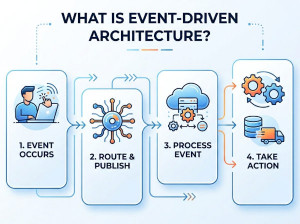
Event-driven systems communicate through asynchronous events instead of direct API calls. Services publish events such as "OrderCreated" or "PaymentCompleted" and other services react independently. This architecture improves decoupling and scalability but requires careful event management and observability.
Self-Contained Systems (SCS)
Self-contained systems divide applications into independent business-focused units that include their own UI, logic, and database. Unlike microservices, each system can often operate almost independently from others. This approach balances autonomy with reduced distributed complexity.
Final Recommendation
A monolith is usually the best choice when building a new product with a small team, limited infrastructure requirements, and fast delivery goals. It minimizes complexity and allows rapid development.
Microservices become valuable when the system grows large enough that independent scaling, team autonomy, resilience, and deployment flexibility outweigh the additional operational complexity.
Many successful companies start with a monolith and gradually evolve parts of the system into microservices only when scaling demands make the transition worthwhile.